
3D Bioprinting
with 3D bioprinting you can create three-dimensional structures using biological materials using specialized printers to deposit layers of bio-inks, which are composed of living cells, biomolecules, and biocompatible materials
3D Bioprinting
With 3D bioprinting you can create three-dimensional structures using biological materials using specialized printers to deposit layers of bio-inks, which are composed of living cells, biomolecules, and biocompatible materials
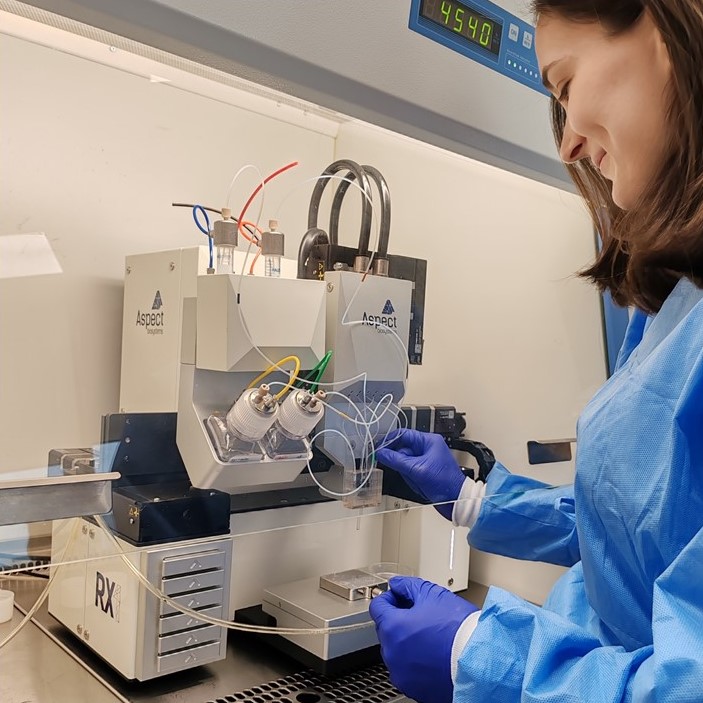
Facility managers Prof. Piero Pavan, Dr. Anna Maria Tolomeo
The Institute 3D bioprinting facility helps researchers in approach the use of 3D printing and bioprinting for their research.
What you can do with us
- 3D cell cultures
- Organ-on-chip
- Tissue model & engeneering
- Drug delivery systems
- Soft robotics
Why choosing us
- Full support from experimental and technical design with our bioengineering team to post-production management.
- Access to the IRP capabilities and know-how in 3D in vitro model production and analysis
Our instruments portfolio
CellInk BioX bioprinter
a complete standalone system that gives users great flexibility with exchangeable printheads and features. The BioX is capable of fabricating constructs containing any type of cells, enabling the fabrication of a wide range of tissue targets.
RX1 Bioprinter
a microfluidics-based bioprinter that empowers tissue regeneration by:
- rapidly switching and patterning – precise placement of cells and biomaterials;
- using fibers as building blocks – microfluidic printheads extrude hydrogel fibers that can mimic features and structure of native tissue;
- bioprinting multicellular structures – inclu sion of supporting cells, such as stromal or endothelial cells, can enhance the ability of a bioprinted therapeutic to promote tissue regeneration.
FormLab3B+ printer
able to print a variety of surgical instruments and medical devices.
This printer is suitable for:
- small to medium-sized parts requiring biocompatibility and sterilization compatibility;
- medical device prototypes, jigs, fixtures, molds, and end-use parts;
- custom anatomical models and surgical instruments for patients;
- visual aids for diagnostic and educational purposes;
- surgical planning models for diagnostic use within FDA-approved workflows;
- specialty materials research and development.
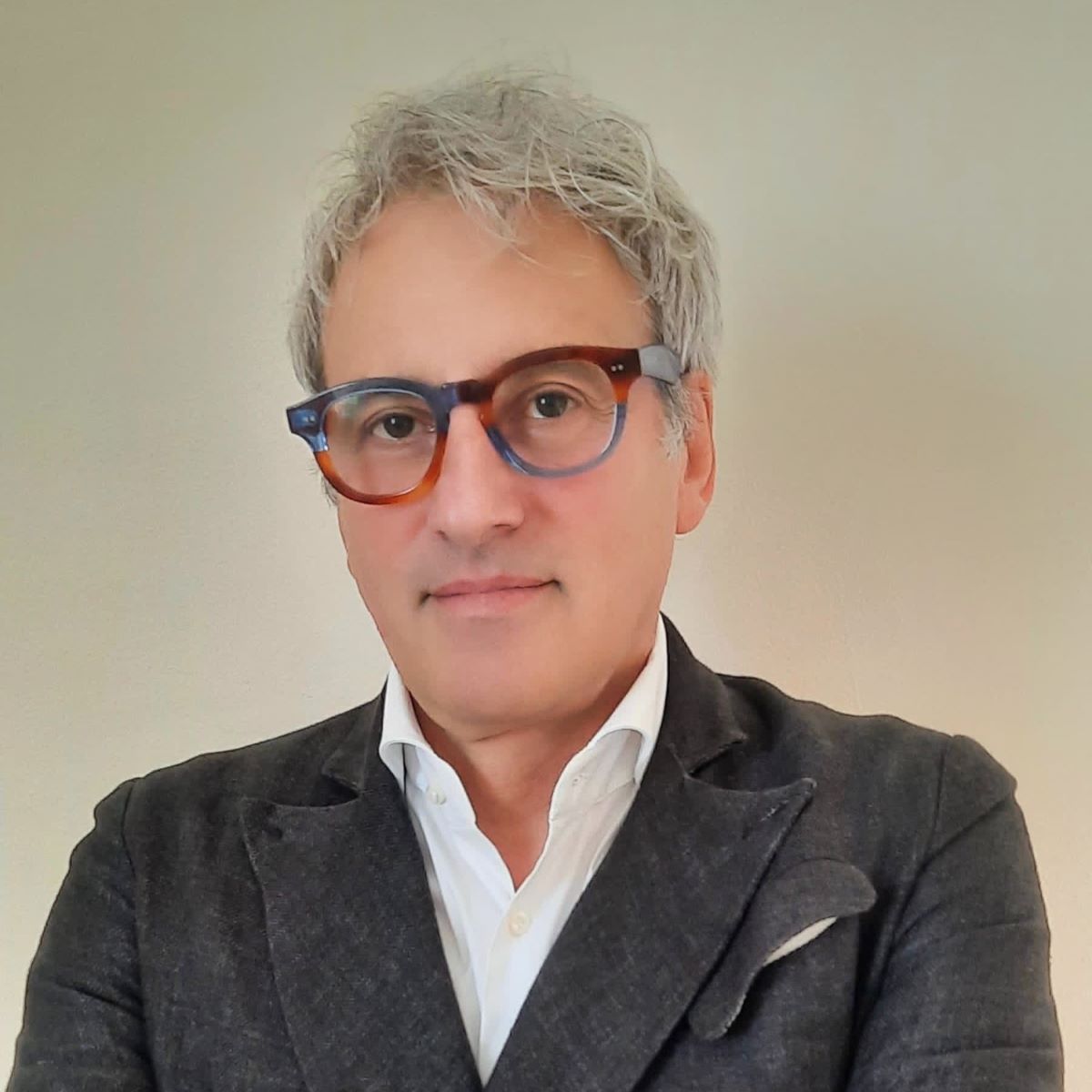
Prof. Piero Pavan
Scopus ID 57214356795
Piero G. Pavan obtained a Structural Engineering degree cum laude at the Engineering Faculty of the University of Padova, Italy, in 1995, with a thesis on computational methods for the numerical simulation of the mechanics of elastomeric materials. He had a PhD degree in Structures Mechanics in 1998, discussing a thesis on computational methods for non-linear dynamics. From 1998 he works in the field of biomechanics with specific regard to computational biomechanics, tissue mechanics and constitutive modelling of soft and hard tissues. He is currently Associate Professor of Bioengineering at the Department of Industrial Engineering of the University of Padova, where he is responsible of the Laboratory of Mechanic of Biological Materials. He is member of the Teaching Committee of the PhD Programme in Industrial Engineering of the University of Padova.
He is affiliated to Fondazione Istituto di Ricerca Pediatrica Città della Speranza of Padova and member of the Centre of Mechanics of Biological Materials of the University of Padova. The present research activity is focused on the biomechanical characterization of muscular and engineered tissues through experimental and computational methods, design of bioreactors and 3D bioprinting.
He is co-author of over 90 publications on peer reviewed journals, with Scopus h-index 31.
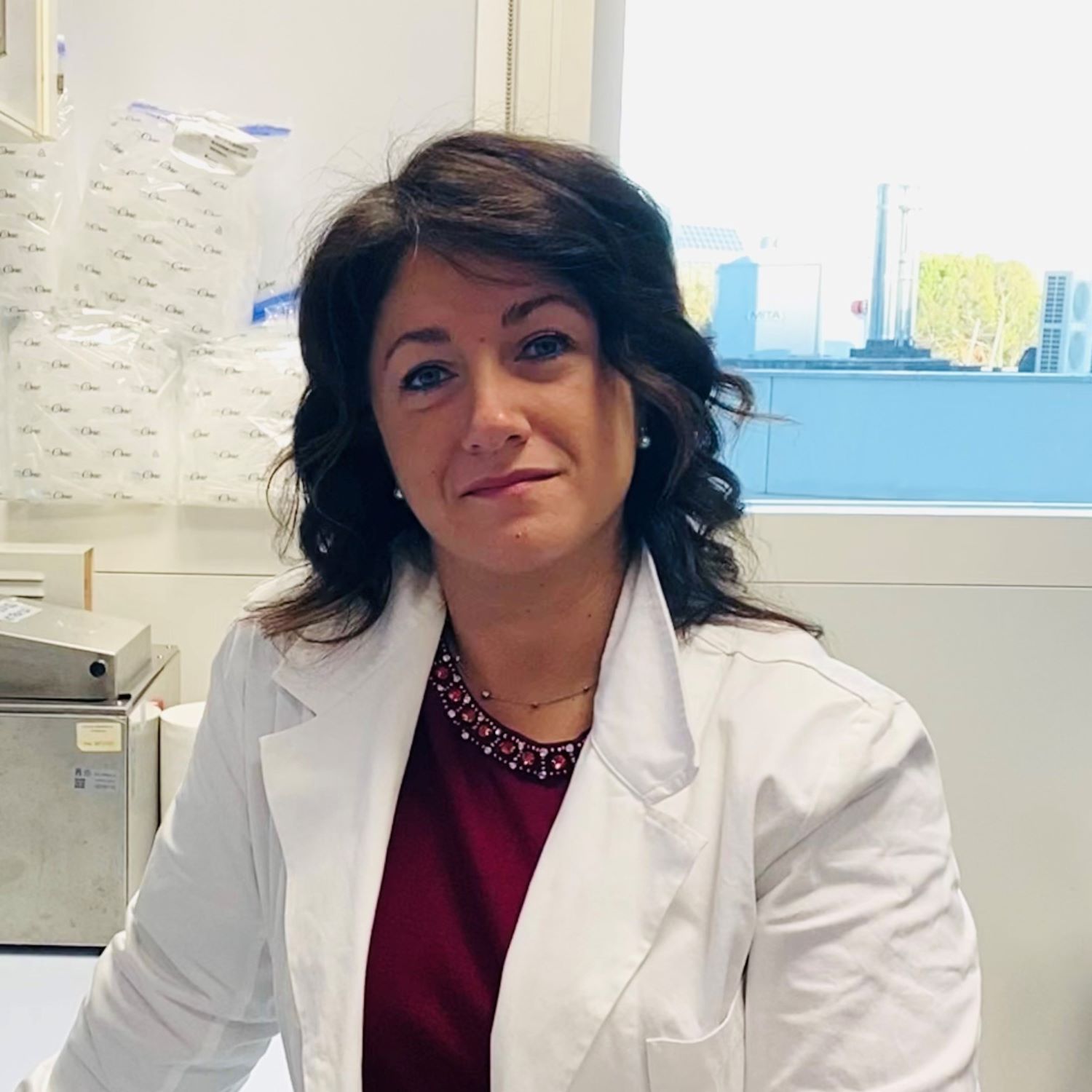
Dr. Anna Maria Tolomeo
Scopus ID 56764354400
Anna Maria Tolomeo is Co-Facility Manager of the 3D Bioprinting Facility at the Pediatric Research Institute “Città della Speranza”. In this role, she oversees the strategic development of biofabrication workflows for regenerative medicine. She works alongside a multidisciplinary team to support research on bioprinted scaffolds, cell-based constructs, and personalized therapies.
She holds a Ph.D. in Developmental Medicine (2018) and a degree in Evolutionary Biology (2014) from the University of Padova. With a strong background in extracellular vesicles (EVs) and nanotechnologies, she brings translational expertise to the development of complex in vitro models, including organ-on-chip platforms and hybrid scaffolds.
She is also Junior Principal Investigator at the Pediatric Research Institute “Città della Speranza” and Principal Scientist at the University of Padova. Since 2023, she coordinates two Research Units within the national LIFE4HUB project, focused on 3D-bioprinted scaffold development and organ reconditioning.
Her previous roles include Scientific Coordinator for FDA-certified nanoparticle production (Typeone Biomaterials Srl) and Co-Supervisor for EV-based therapeutic QA (Exo Biologics SA), contributing to one of the first EMA-approved first-in-human studies.
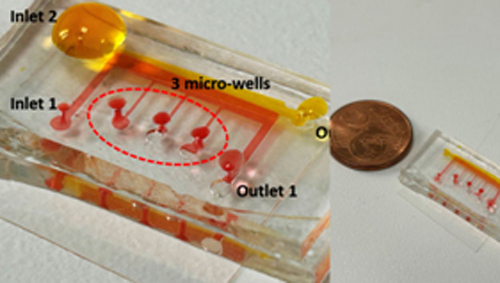
Prof. Elisa Cimetta leads the Biomedical Applications of Multiscale Engineering Technologies (BIAMET) Laboratory, which develops advanced human-relevant in vitro models through the integration of microfluidics, biofabrication, and tissue engineering. Research activities span the design of microphysiological systems, organ-on-chip platforms, 3D bioprinted tissues, and extracellular vesicle-based technologies to investigate cell-cell communication, disease mechanisms, and therapeutic response. These platforms enable precise control of the cellular microenvironment, including biochemical gradients, tissue architecture, and dynamic perfusion, providing powerful tools for mechanistic studies, drug testing, and the development of New Approach Methodologies (NAMs).
Representative examples of microfluidic and biofabrication technologies developed within the BIAMET laboratory. Blood-brain-barrier-on-chip device integrating dynamic perfusion and three-dimensional cell culture compartments.
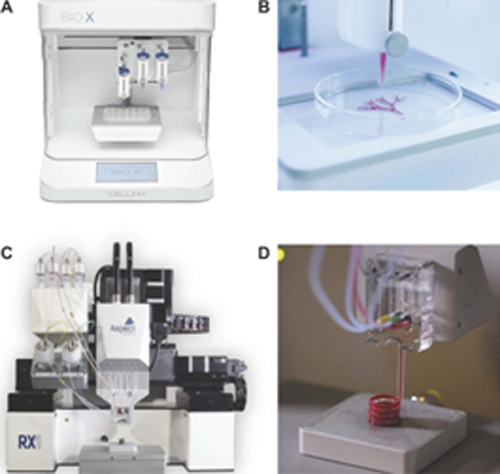
The Experimental Cardiology Area (Coordinator Prof. Giovanni Di Salvo) employs two complementary 3D bioprinting platforms for cardiac muscle generation: the Cellink BioX and the Aspect Biosystems RX1. The BioX provides versatility and ease of use, while the RX1 enables precise control of complex tissue microenvironments. Together, these systems support the development of physiologically relevant cardiac models, addressing diverse experimental requirements.
Comparison of 3D bioprinting platforms. (A) Cellink BioX. (B) Representative construct generated using the Cellink BioX. (C) Aspect Biosystems RX1. (D) Representative construct generated using the Aspect Biosystems RX1.
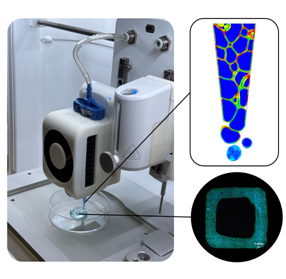
The Tissue Engineering Laboratory (PI: Prof. Piero Pavan) applies 3D printing in the regeneration of damaged muscle tissues and in the creation of customized experimental supports. The use of hydrogels derived from decellularized extracellular matrix as bioinks enables reproduction of the biochemical composition of native tissue, promoting integration and functionality of implants. The printing processes involve both direct 3D bioprinting and the fabrication of 3D-printed molds, which are subsequently used for the deposition of hydrogels containing various cell lines.
Numerical simulation of printing process and creation of specific shapes using decellularized extracellular matrix-based gel and cells.